
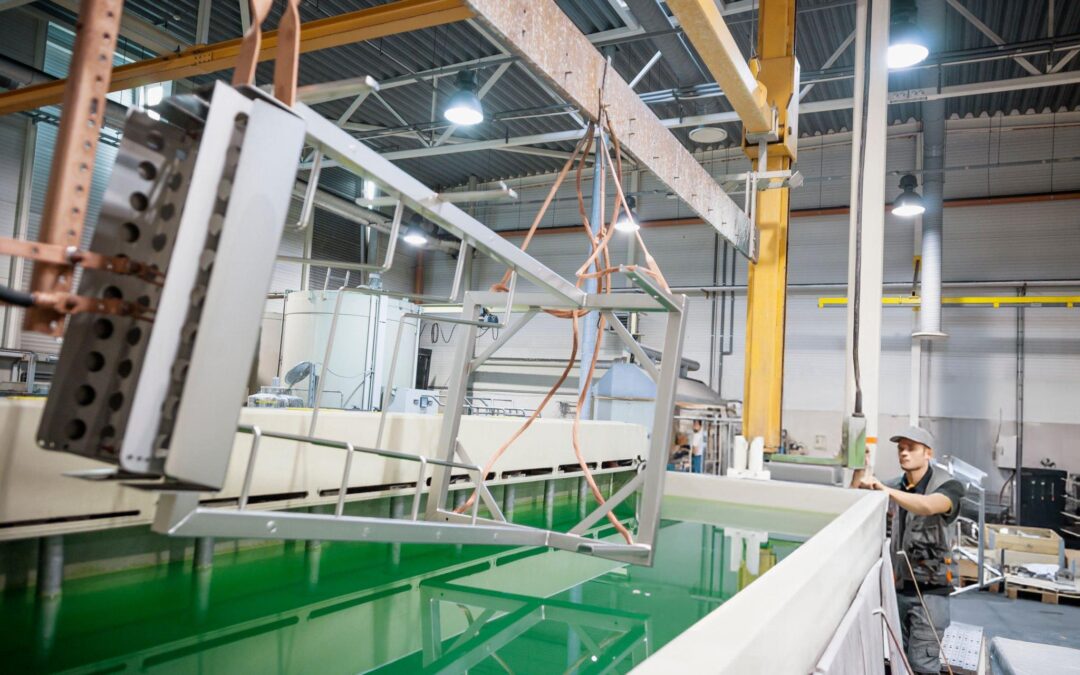
In the fast-paced industry of metal finishing, every step counts. Anodizing racks are more than just tools to hold parts — they’re a quiet force behind efficient, high-quality results. Designed to keep components stable during anodizing, these racks ensure uniform coating and help avoid costly errors or delays.
A poorly designed rack can slow down production, causing parts to shift or coat unevenly. That often means rework, wasted time, and inconsistent quality. The right anodizing racks help teams work faster, reduce downtime, and maintain a smooth workflow — even under pressure.
Why the Right Rack Makes a Big Difference
Anodizing racks do more than hold parts — they support consistency and speed by design. Well-engineered racks:
● Secure parts tightly for even, consistent coating
● Speed up loading and unloading with quick-release mechanisms
● Minimize setup time between production runs
● Withstand repeated use in harsh environments
● Move easily between anodizing stages with minimal handling
Without the right rack, it’s easy for parts to shift, scratch, or coat unevenly. That can mean delays and do-overs — the kind of disruptions no production line wants.
Built for Speed and Consistency
Design matters. Smart features built into anodizing racks help reduce time spent on prep and minimize slowdowns. Look for:
● Modular or adjustable designs that adapt to different part shapes and sizes ● Tool-free adjustments for faster changeovers
● Quick-release clips or locking arms to simplify part loading
● Durable materials like aluminum (lightweight, conductive) or titanium (strong, corrosion-resistant)
These elements work together to keep your production line running efficiently, cycle after cycle.
Getting the Most Out of Your Racks
Even the best rack needs a little upkeep. To keep performance high:
● Clean regularly to remove buildup that could affect conductivity
● Inspect for wear, damage, or misalignment
● Tighten or replace worn components before they cause problems
● Customize racks for specific parts or workflows when possible
Customization can reduce handling time and improve stability, especially for unique or high-volume parts.
Choosing the Right Rack
When selecting anodizing racks, consider:
● Part dimensions – Does the rack support your full range of sizes and shapes? ● Production volume – Are you running daily cycles or occasional batches?
● Material choice – Aluminum is lightweight and efficient for conductivity; titanium is ideal for demanding environments.
● Workflow demands – Do you need fast changeovers or racks that hold many parts at once?
High-volume shops might prioritize speed and durability. Smaller operations might prefer flexibility and versatility. Either way, the right rack will reduce friction, improve consistency, and keep your team focused on output — not workarounds.
Final Thoughts
Reliable anodizing racks are a key part of a well-run metal finishing operation. From smoother handling to better coating results, these tools quietly boost production speed and quality behind the scenes. A small upgrade can lead to a big difference.
At Sequel Anodizing Racks, we build racks with real production floors in mind — customizable, built to last, and made to keep your process moving. Let’s find the right fit for your parts and your pace.
Explore more at SequelAnodizingRacks.com